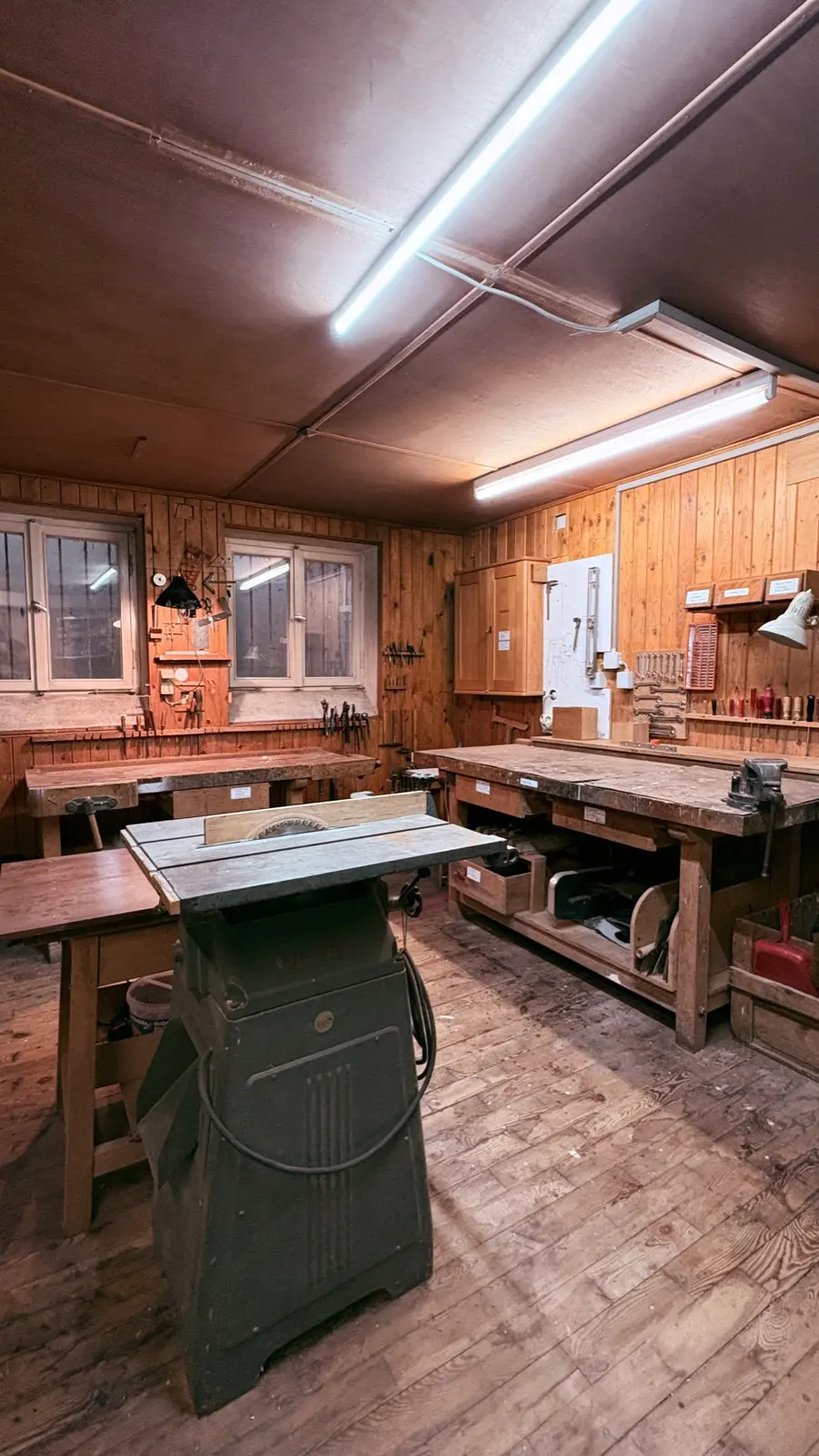
Dehumidifier setup for a basement workshop or storage room
Use a dehumidifier that drains continuously through a hose to a floor drain or sump, set to 50 percent, so it never stops on a full bucket. Add a condensate pump only if the drain is uphill. A hygrometer on the far wall and a leak alarm under the unit tell you it is still working when nobody is there.
Equipment schedule
Product links on this page go to Amazon.
| For | Product | Link |
|---|---|---|
| Dehumidifier | AlorAir Sentinel HD55 A compact commercial-style dehumidifier built for basements and crawl spaces. It sits on the floor or a shelf, drains continuously through a hose, and is designed to run unattended. | Check on Amazon |
| Gravity drain to a floor drain or sump | Dehumidifier drain hose with garden-hose thread Most portable dehumidifiers have a threaded drain port that accepts a standard garden-hose fitting. A short hose to a floor drain ends bucket emptying. | Check on Amazon |
| Pump, when the drain is uphill optional | Little Giant VCMA-15ULS condensate pump Only needed if the water cannot run downhill the whole way. | Check on Amazon |
| Independent humidity reading | Govee H5075 hygrometer thermometer A small display that shows humidity and temperature and logs readings to a phone app over Bluetooth. An independent reading tells you what the room is doing away from the dehumidifier. | Check on Amazon |
| Leak alarm | Govee Wi-Fi water leak detectors Puck-shaped sensors that sound an alarm and send a phone alert when water touches them. One goes under the dehumidifier and one beside the pump. | Check on Amazon |
| Extra protection inside tool chests optional | Eva-Dry E-333 renewable mini dehumidifier A cordless desiccant unit for small closed spaces. When the indicator changes color you plug it in to dry it out, then reuse it. | Check on Amazon |
- Applies to
- Your tools rust, cardboard goes soft and the space smells damp. Nobody sits there for long, so noise matters less than running unattended for months.
- Floor space
- A shelf or 2 x 2 feet of floor near a drain or sump
- Budget
- About $550 to $750
Why does a workshop dehumidifier need a continuous drain?
A dehumidifier with a full bucket is switched off. In a room you visit twice a week, that means it spends most of its time doing nothing. The system has to drain by itself. The AlorAir Sentinel HD55 has no bucket at all and is designed around a hose.
Installation
- Put the unit where air can circulate, near the middle of the space if you can, raised on a shelf or blocks so the drain outlet is above the drain.
- Connect the hose and run it downhill to the floor drain or sump pit, with no rises along the way.
- If the only drain is higher than the unit, drain into a condensate pump and run its tubing to the drain.
- Place a leak detector under the unit and another beside the pump.
- Hang the hygrometer on the far wall at about chest height.
- Set the target to 50 percent.
Monthly check
Once a month, look at the humidity history, pour a cup of water into the pump reservoir to confirm it runs, and clean the air filter. A blocked filter is the usual reason a unit that used to keep up no longer does.
What about tool chests and cabinets?
A tool chest or cabinet has its own air. A rechargeable desiccant unit such as the Eva-Dry E-333 renewable mini dehumidifier inside a closed chest takes care of what the room system cannot reach.
Outside the scope of this system
It will not dry a basement that takes in water. If the floor is wet after rain, start with fix the water first. Size questions are covered in what size dehumidifier you need.
Frequently asked
Why not a cheaper portable unit for a workshop?
A portable 50-pint unit on a drain hose is a reasonable choice and costs less. The commercial-style unit is built for continuous unattended running and cooler spaces. If your basement stays above about 65 degrees and you are happy to check on it, the portable saves money.
Can I drain into the sump pit?
Usually yes. It is a common arrangement. Secure the hose so it cannot fall out of the pit, and check your local rules if you are unsure.
Will this stop my tools rusting?
Holding the room near 50 percent slows rust a great deal. Bare steel can still rust where cold metal meets humid air, so oil or wax on tool surfaces remains worth doing.
Sources
- A Brief Guide to Mold, Moisture and Your Home, U.S. Environmental Protection Agency
- Dehumidifiers, ENERGY STAR